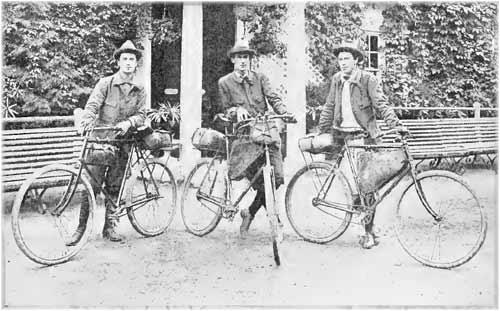
In time we got to Fyaukmyaung, or Kyoukmoung, or anything you care to call it, but notorious a year or two back for being looted by the dacoits. We were a little tired of a rice diet, and Lowe in his innocence suggested a fish dinner. The idea was brilliant, but it nearly killed the three of us. We had eaten frogs' legs in France, and regarded with equanimity the consumption of spring puppies in China. Therefore a feed of Burmese nga-pee was appropriate.
When we had recovered from our illness we investigated how the food was prepared. First of all the fish were caught and laid in the sun for three days to dry. The fish being then dead, though moving, were pounded in plenty of salt. Then they were put into a jar, and when the mouth was opened people five miles away knew all about it. Nga-pee, I soon saw, was a delicacy that could only be appreciated by cultured palates. The taste is original; it is salt, rather like rancid butter flavoured with Limburger cheese, garlic, and paraffin oil. The odour is more interesting than the taste. It is more conspicuous.
Fraser, John Foster. Round the world on a wheel. London: Methuen & Co., 1899.
Fraser John Foster, Burmese nga-pee
- Details
- Zugriffe: 4136